Semantic Keywords: A Simple Guide to Modern SEO

Search engines today are smarter than ever. They don’t just look at exact keywords — they try to understand meaning, context, and intent.
This is where semantic keywords come in.
Using them helps Google understand what your content is really about and improves your chances of ranking higher. Let’s dive in.
Table of Contents
What Are Semantic Keywords?
Semantic keywords are words and phrases that are meaningfully related to your main keyword.
They may not be synonyms, but they are connected by topic, concept, or context.
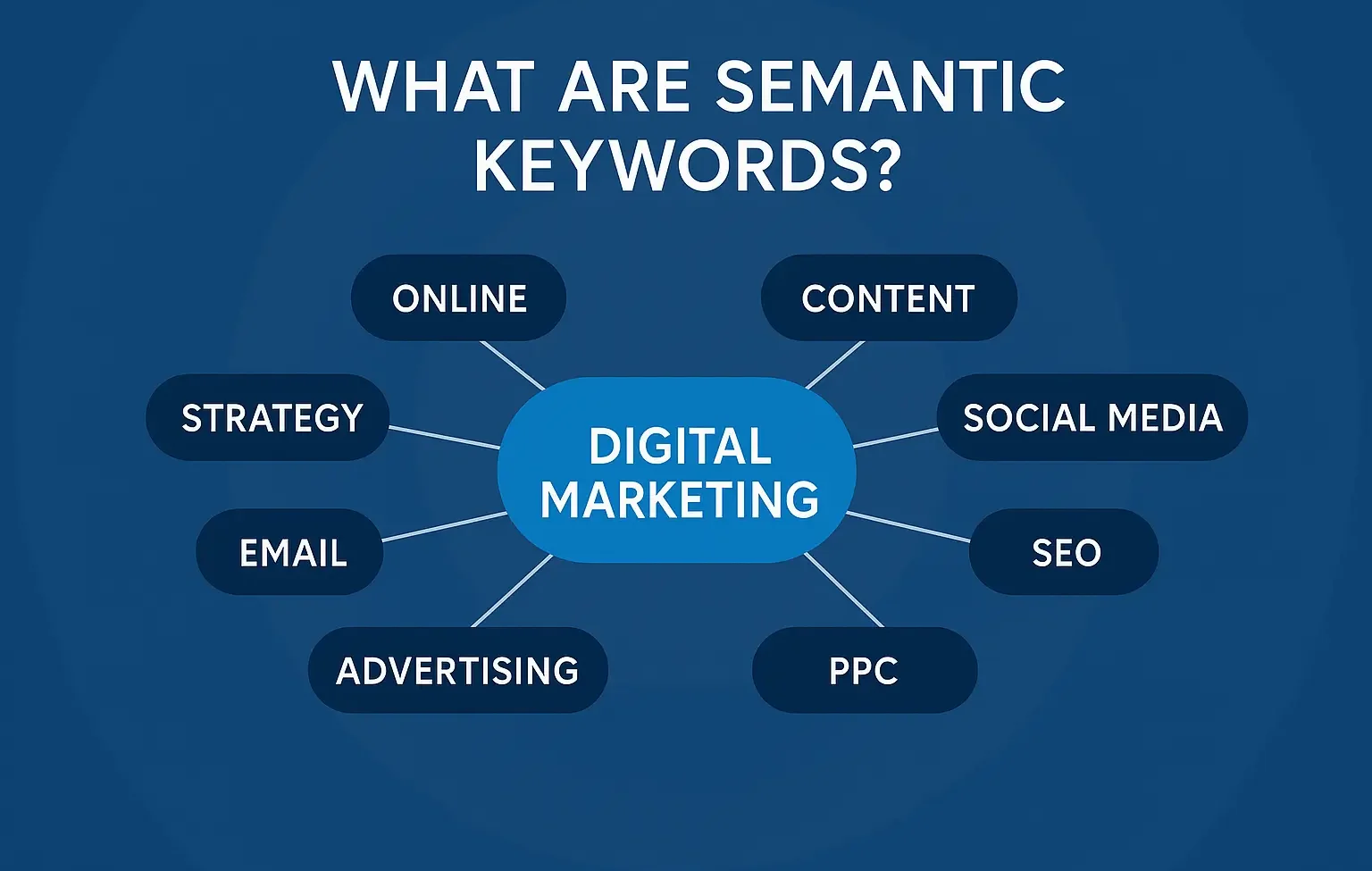
For example, if your main keyword is “digital marketing”, semantic keywords include:
- SEO
- content marketing
- PPC
- analytics
- social media campaigns
These terms help search engines understand the deeper theme of your page.
Why are they Important?
1. They Help Google Understand Context
With NLP, AI, and systems like the Knowledge Graph, Google uses semantic relationships to understand the whole topic instead of just one keyword.
2. Avoid Keyword Stuffing
You don’t have to repeat the main keyword dozens of times. Semantic keywords add natural variety.
3. Improve Topical Authority
When your content covers connected concepts, Google sees your page as complete, not shallow.
4. Match Search Intent Better
Users search in different ways. Semantic keywords help you cover multiple expressions of the same idea.
5. Better User Experience
Your content feels more natural, detailed, and helpful — which keeps people on the page longer.
How to Find Semantic Keywords
1. Google’s “People Also Ask” and Related Searches
Type your keyword and look at:
- People also ask (PAA)
- Related searches (bottom of the page)
These reflect real user intent.
2. Analyze Top-Ranking Pages
Check what words and topics they naturally include. These usually reflect semantic relevance.
3. Use Keyword Tools
Tools that help uncover semantic terms:
- Google Keyword Planner
- Ahrefs
- SEMrush
- Surfer SEO
- Frase
- Clearscope
They highlight related keywords and NLP terms.
4. Look at Entity-Based Suggestions
Search engines recognize “entities” (people, places, concepts). Add these to improve topic depth.
5. Use Your Own Knowledge
Think about all the subtopics someone must understand to learn the main topic.
Those subtopics = semantic keywords.
How to Use Semantic Keywords
1. Insert Them Naturally in Your Content
No force, no stuffing. Write naturally and they will blend in.
2. Add Them to Headings
H2/H3 sections with related concepts strengthen topical relevance.
3. Use Them in Example Sections
Real-life examples often make semantic keywords appear naturally.
4. Spread Them Across the Page
Distribute them in:
- introduction
- body
- conclusion
- FAQ section
5. Cover Subtopics Fully
The more complete your coverage, the more semantic signals you send to Google.
Conclusion
Semantic keywords are not an old-school SEO trick — they are part of modern, meaning-focused search.
By adding related concepts, answering user intent, and covering your topic deeply, you help Google understand your content better and deliver it to the right audience.
Use semantic keywords naturally, and your content becomes more valuable for both search engines and readers.

Muhilarasan is a Digital Marketing Freelancer specializing in SEO, content strategy, and online brand growth. He helps businesses improve visibility, attract the right audience, and build a strong presence across digital platforms.

Muhilarasan is a Digital Marketing Freelancer specializing in SEO, content strategy, and online brand growth. He helps businesses improve visibility, attract the right audience, and build a strong presence across digital platforms.
View All Articles