What Is White Hat SEO and Black Hat SEO?

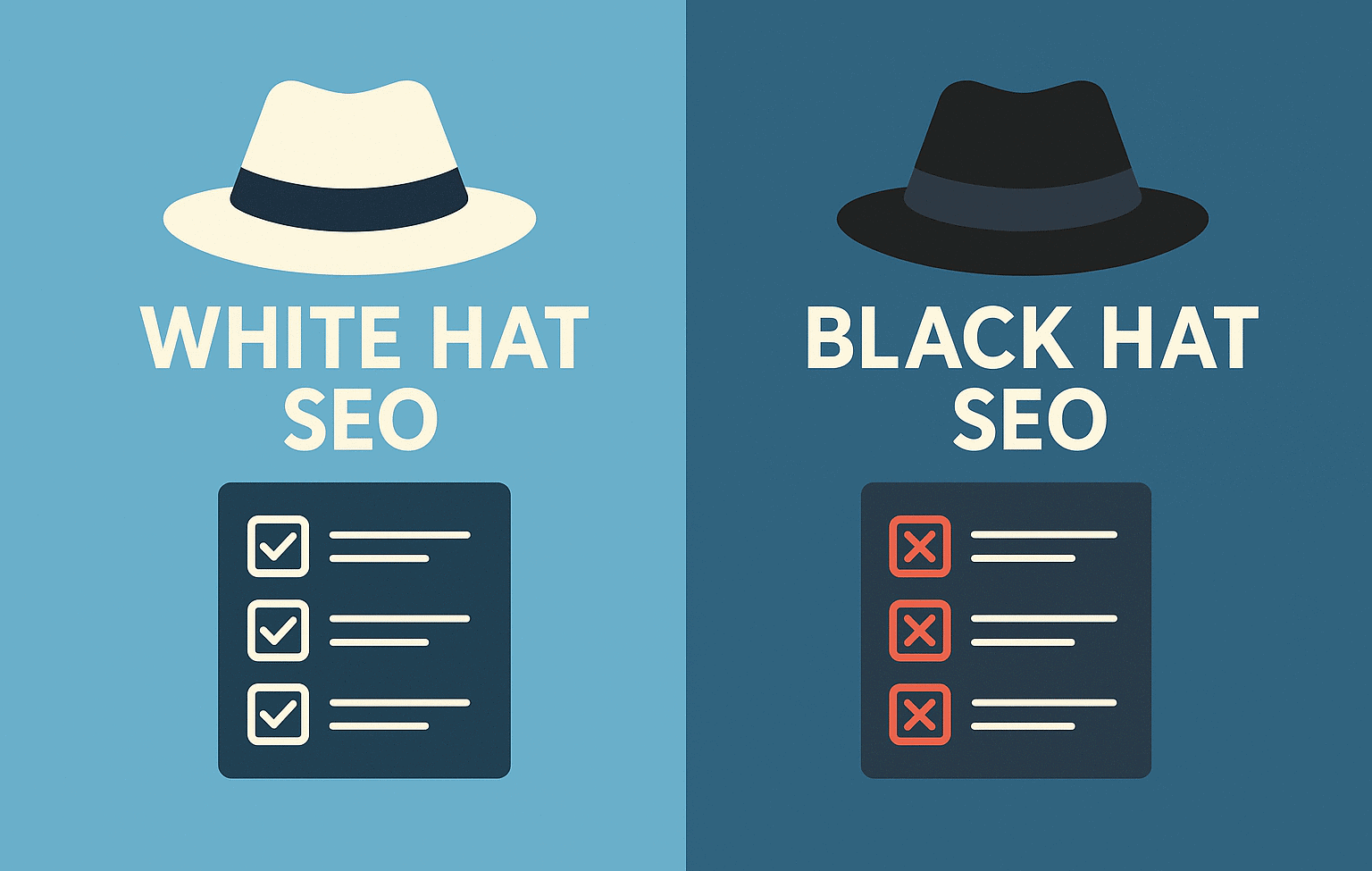
If SEO were a movie, White Hat SEO would be the noble hero playing by the rules — and Black Hat SEO would be the cunning villain trying to cheat the system.
Both aim for the same goal: higher rankings on Google. But the difference lies in how they get there. One builds long-term trust, while the other looks for quick wins (and risky shortcuts).
Let’s explore what white hat and black hat SEO mean, which tactics you should follow, which ones to avoid, and the grey area where some marketers love to experiment.
What Is White Hat SEO?
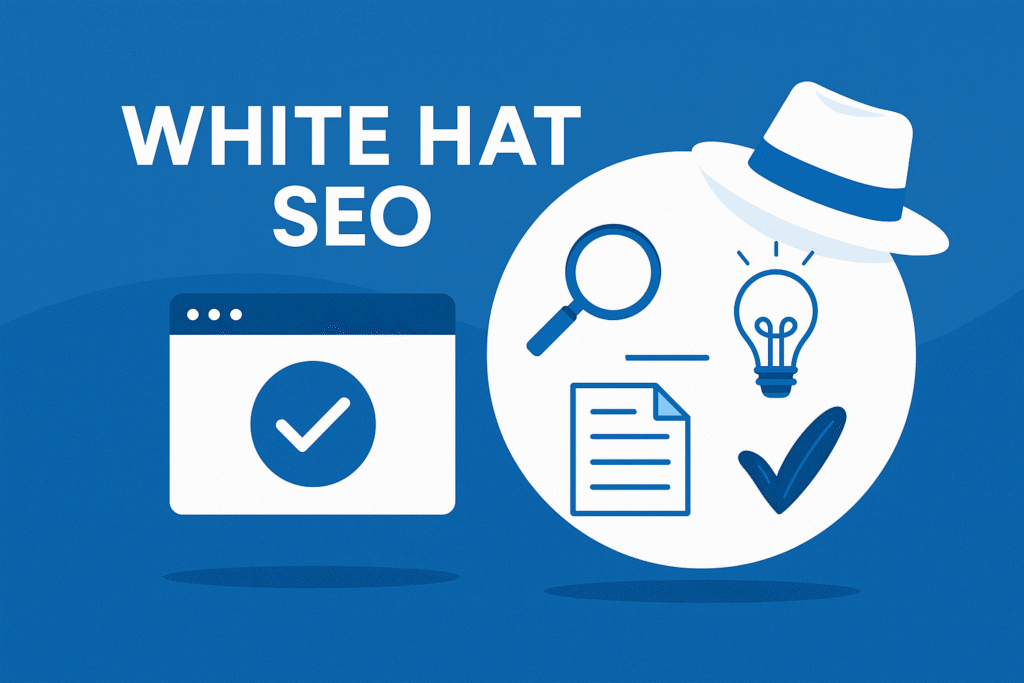
White Hat SEO refers to optimization techniques that follow Google’s search engine guidelines and focus on providing value to real users.
It’s the ethical, sustainable way of doing SEO — the one that makes both your readers and Google happy.
White Hat SEO aims for long-term growth, using strategies that improve user experience, relevance, and trust.
In short:
White Hat SEO = Ranking through quality, relevance, and honesty.
What Is Black Hat SEO?
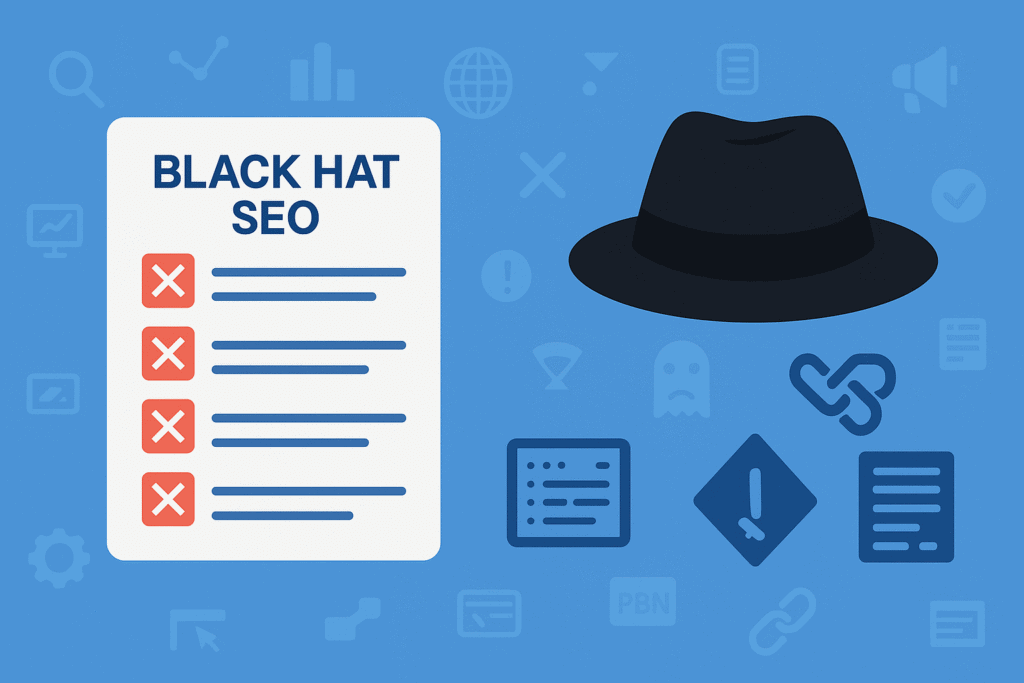
Black Hat SEO is the opposite — it uses manipulative tactics that try to trick search engines into ranking a site higher.
These techniques often violate Google’s Webmaster Guidelines and can lead to penalties or even deindexing from search results.
They might give you quick results, but they come with serious risks — like losing rankings overnight or damaging your website’s reputation.
In short:
Black Hat SEO = Ranking through tricks, deception, and risk.
White Hat SEO Tactics You Should Follow

If you want steady growth and a solid online presence, these are the strategies you should use:
✅ 1. Quality Content Creation
Create original, informative, and engaging content that solves users’ problems. Google rewards content that actually helps people.
✅ 2. Keyword Optimization
Use relevant keywords naturally — not stuffed. Align your content with user intent.
✅ 3. On-Page SEO Best Practices
Use proper headings (H1, H2), meta tags, internal links, descriptive URLs, and optimized images.
✅ 4. Mobile-Friendly and Fast Website
Google prioritizes websites that load quickly and look good on all devices.
✅ 5. Ethical Link Building
Earn backlinks through guest posting, PR mentions, and partnerships — not link farms or spammy exchanges.
✅ 6. Secure Website (HTTPS)
A secure site builds trust and improves rankings.
✅ 7. User Experience (UX) Optimization
Ensure easy navigation, logical design, and valuable content flow. Happy users = better SEO.
Black Hat SEO Tactics You Should Avoid

Here’s the dark side — the tactics that might seem tempting but can seriously backfire:
❌ 1. Keyword Stuffing
Cramming keywords unnaturally into content just to manipulate rankings. It makes content unreadable and risks penalties.
❌ 2. Cloaking
Showing different content to search engines and users — a clear violation of Google’s guidelines.
❌ 3. Buying or Exchanging Links
Google can easily detect paid or spammy backlinks, leading to penalties.
❌ 4. Hidden Text or Links
Using white text on a white background or invisible links to trick crawlers — a classic black hat move.
❌ 5. Duplicate or Spun Content
Copying content from other sites or auto-generating low-quality articles can destroy your credibility.
❌ 6. Clickbait or Misleading Titles
Promising something sensational but delivering poor content will increase bounce rates and hurt trust.
❌ 7. Private Blog Networks (PBNs)
Building artificial networks of websites just to create backlinks — risky and outdated.
What Is Grey Hat SEO?
Between the hero and the villain, there’s always… the anti-hero.
That’s Grey Hat SEO — techniques that aren’t officially banned by Google but aren’t entirely ethical either.
Grey Hat tactics try to balance between the safe and risky sides of SEO — giving faster results than white hat, but without going full black hat.
Examples of Grey Hat SEO:
- Buying expired domains for backlinks.
- Aggressive guest posting for link juice.
- Using clickbait titles with real value content.
- Automating outreach messages.
While they can work, they’re like walking on thin ice — one algorithm update, and your rankings could crash.
Conclusion
SEO isn’t just about getting to the top of Google — it’s about staying there.
White Hat SEO may take longer, but it builds a foundation of trust and authority. Black Hat SEO, on the other hand, might give short-term wins but can end in disaster. Grey Hat SEO sits in between — tempting, but unpredictable.
So if you’re serious about long-term success, stick to the ethical path.Because the best SEO strategy is simple: Serve users first, and Google will follow.
Q1: What is White Hat SEO?
A: White Hat SEO follows Google’s rules and focuses on improving user experience through high-quality content, ethical link building, and strong technical optimization.
Q2: What is Black Hat SEO?
A: Black Hat SEO uses manipulative tactics to trick search engines — such as keyword stuffing, cloaking, or buying backlinks — often resulting in penalties.
Q3: What is Grey Hat SEO?
A: Grey Hat SEO lies between ethical and unethical practices — using tactics that are not strictly forbidden but could become risky after future algorithm updates.

Muhilarasan is a Digital Marketing Freelancer specializing in SEO, content strategy, and online brand growth. He helps businesses improve visibility, attract the right audience, and build a strong presence across digital platforms.

Muhilarasan is a Digital Marketing Freelancer specializing in SEO, content strategy, and online brand growth. He helps businesses improve visibility, attract the right audience, and build a strong presence across digital platforms.
View All Articles