What is the Difference Between Traditional Marketing and Digital Marketing

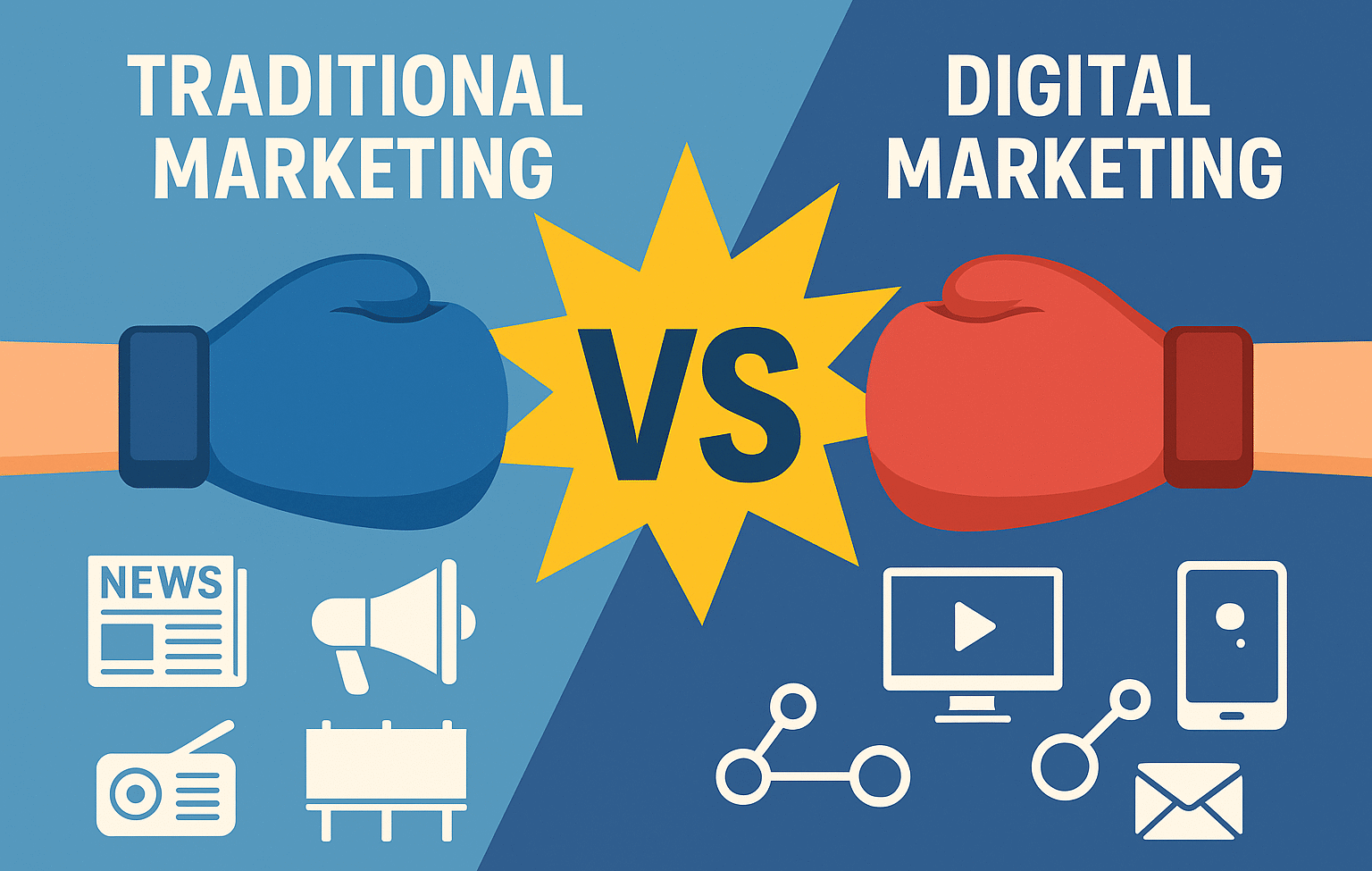
Have you ever wondered why some brands still spend crores on TV commercials while others focus entirely on Instagram reels and Google ads? It’s not just about being “old-school” or “modern”—it’s about two completely different worlds of marketing thinking. Traditional and digital marketing may share the same goal—to connect with customers and boost sales—but the way they reach people, the kind of engagement they create, and the results they deliver are worlds apart.
In this post, let’s explore how these two forms of marketing differ, what makes each one unique, and which one fits best for businesses in today’s fast-changing digital world.
Difference Between Traditional Marketing and Digital Marketing
Here’s a quick side-by-side comparison to give you a clear idea of how both approaches differ in their nature and execution:
| Factor | Traditional Marketing | Digital Marketing |
| Definition | Traditional marketing involves promoting products or services through offline channels like newspapers, radio, TV, or billboards. | Digital marketing uses online platforms such as social media, search engines, websites, and emails to promote brands. |
| Medium of Communication | Uses physical media such as print ads, flyers, hoardings, and broadcast networks. | Uses digital channels like social media, Google Ads, YouTube, websites, and email campaigns. |
| Interactivity | One-way communication; the audience receives the message but cannot interact instantly. | Two-way communication; audiences can comment, like, share, and engage directly with brands. |
| Reach | Limited to a specific geographical area or region. | Global reach — campaigns can target users worldwide with a few clicks. |
| Content Format | Static and fixed, such as images, audio jingles, and print ads. | Dynamic and diverse — includes videos, blogs, reels, podcasts, interactive posts, and more. |
| Cost Efficient | Often expensive due to printing, broadcasting, and distribution costs. | Generally more affordable with flexible budgeting and measurable ROI. |
| Targeting Options | Broad targeting; difficult to narrow down to specific audience segments. | Advanced targeting; can focus on audience behavior, demographics, and interests precisely. |
What is Traditional Marketing?
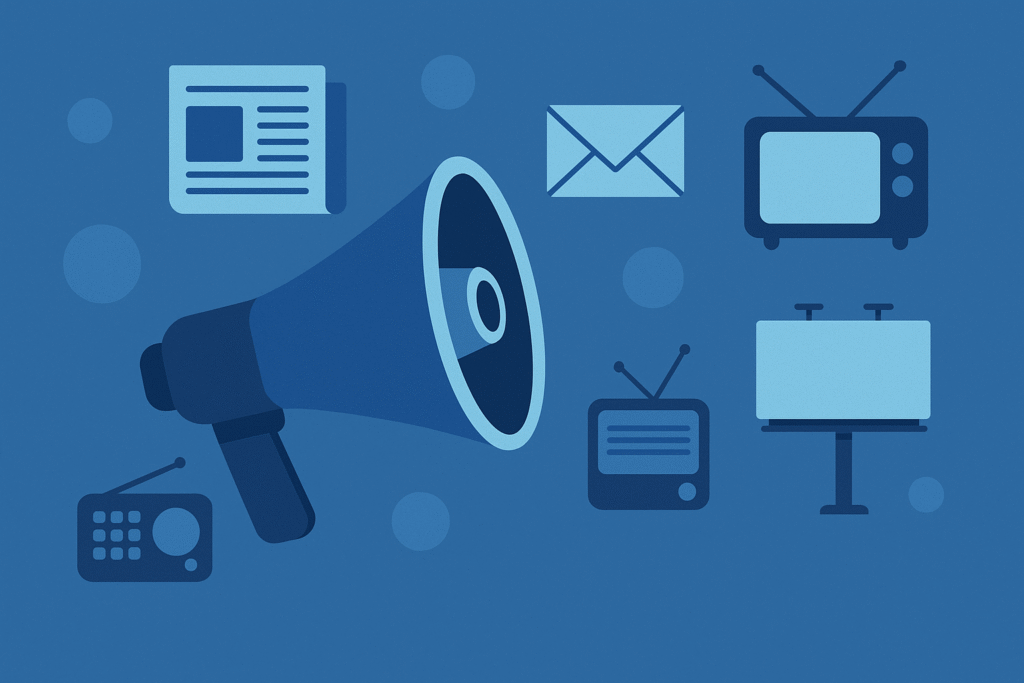
Traditional marketing is the classic form of marketing that ruled the business world before the internet revolution. It’s what you see on TV commercials, hear on the radio, or pass by on massive billboards during your daily commute. It relies heavily on brand image, repetition, and emotional appeal to influence people’s decisions. The beauty of traditional marketing lies in its tangibility — a glossy magazine ad or a well-shot TV spot can leave a lasting impression.
However, the challenge with this method is that it’s not easy to measure the exact impact. You can’t really track how many people saw your ad or how many acted on it. Yet, for decades, it has built iconic brands and shaped cultural moments — think of Coca-Cola’s Christmas ads or Amul’s witty billboards.
What is Digital Marketing?
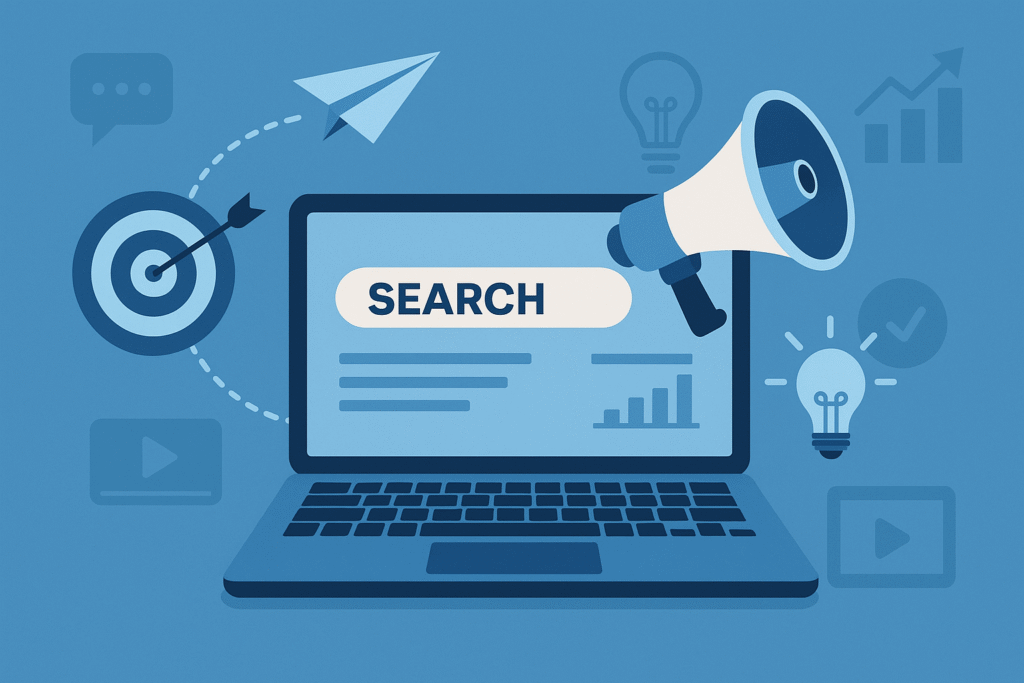
Digital marketing, on the other hand, is the art of connecting with audiences in the online space — where people actually spend most of their time today. From scrolling through Instagram to searching on Google or watching YouTube, digital marketing meets consumers in their virtual world. It’s more interactive, data-driven, and cost-effective.
Unlike traditional methods, digital marketing allows brands to track results in real time. You can see how many people viewed your ad, clicked your link, or made a purchase — all within minutes. Plus, it gives even small businesses the power to compete with giants by targeting specific audiences with laser precision. Whether through SEO, social media, or paid ads, digital marketing is all about building meaningful, measurable connections.
Key Differences Between Traditional Marketing and Digital Marketing
If we break it down by core aspects, here’s how these two differ in practice:
- Medium of Communication: Traditional marketing uses physical platforms (TV, radio, newspapers), while digital marketing happens entirely online through platforms like Facebook, YouTube, and Google.
- Interactivity: Traditional marketing is like giving a speech; digital marketing is like having a conversation. It lets audiences talk back, react, and share their opinions.
- Reach: Traditional campaigns are limited by geography and cost. Digital marketing, however, can reach millions of people worldwide almost instantly.
- Content Format: Traditional ads are usually short and static, while digital content can be longer, story-driven, and constantly evolving through updates or comments.
- Cost Efficiency: Traditional campaigns often require high budgets for production and placement, whereas digital ads can start with as little as a few hundred rupees.
- Targeting Options: Traditional marketing shoots broadly, hoping to hit the right audience. Digital marketing, however, allows fine-tuned audience segmentation — targeting age, location, interest, or even user behavior.
Advantages and Disadvantages
Traditional Marketing Advantages:
- Tangible and memorable – print and TV ads can feel more personal and trustworthy.
- Great for local branding and older audiences who are less active online.
- Builds emotional appeal through large-scale campaigns.
Traditional Marketing Disadvantages:
- High cost with limited ways to measure performance.
- Less control over audience targeting and feedback.
- Time-consuming and harder to adapt to quick market changes.
Digital Marketing Advantages:
- Affordable, flexible, and perfect for businesses of any size.
- Real-time data and analytics allow better decision-making.
- Enables direct engagement and personalized experiences.
- Global visibility with precise targeting.
Digital Marketing Disadvantages:
- It can get overwhelming with too many platforms and trends.
- Requires constant updates and active management.
- Dependent on technology and internet access.
Conclusion
In the end, traditional and digital marketing aren’t enemies — they’re two sides of the same coin. Traditional marketing builds trust and brand authority, while digital marketing brings precision and real-time engagement. The smartest businesses today blend both: a strong offline presence that connects emotionally and an agile online strategy that converts effectively.
Marketing is no longer about just selling — it’s about creating experiences that people remember, whether they see them on a billboard during their morning drive or in a reel while scrolling at midnight.

Muhilarasan is a Digital Marketing Freelancer specializing in SEO, content strategy, and online brand growth. He helps businesses improve visibility, attract the right audience, and build a strong presence across digital platforms.

Muhilarasan is a Digital Marketing Freelancer specializing in SEO, content strategy, and online brand growth. He helps businesses improve visibility, attract the right audience, and build a strong presence across digital platforms.
View All Articles