What is Keyword Research in Digital Marketing? (And Why It Matters More Than You Think)


If digital marketing were a game of treasure hunting, then keyword research would be your map. Without it, you’re just wandering around with a shovel, hoping you’ll dig in the right spot.
Every time someone types something into Google — from “best pizza near me” to “how to fix my life with SEO” — they’re giving away a clue about what they want. Keyword research is the art (and a bit of science) of collecting those clues.
In short: it’s how marketers read minds — legally.
What is Keyword Research in Digital Marketing?

If you’ve ever stared at the first page of Google and wondered, “Why is their website up there and not mine?”, here’s the secret — it’s not magic, it’s keyword research.
Keyword research is basically understanding how people think when they search. You find the words, phrases, and questions your target audience is typing into Google — then you build your content around those exact searches.
It’s less about tricking the algorithm and more about connecting with your audience in their language. When you do it right, your content doesn’t just show up — it shows up for the right people at the right time.
So in essence: keyword research is the bridge between what you want to say and what your audience wants to hear.
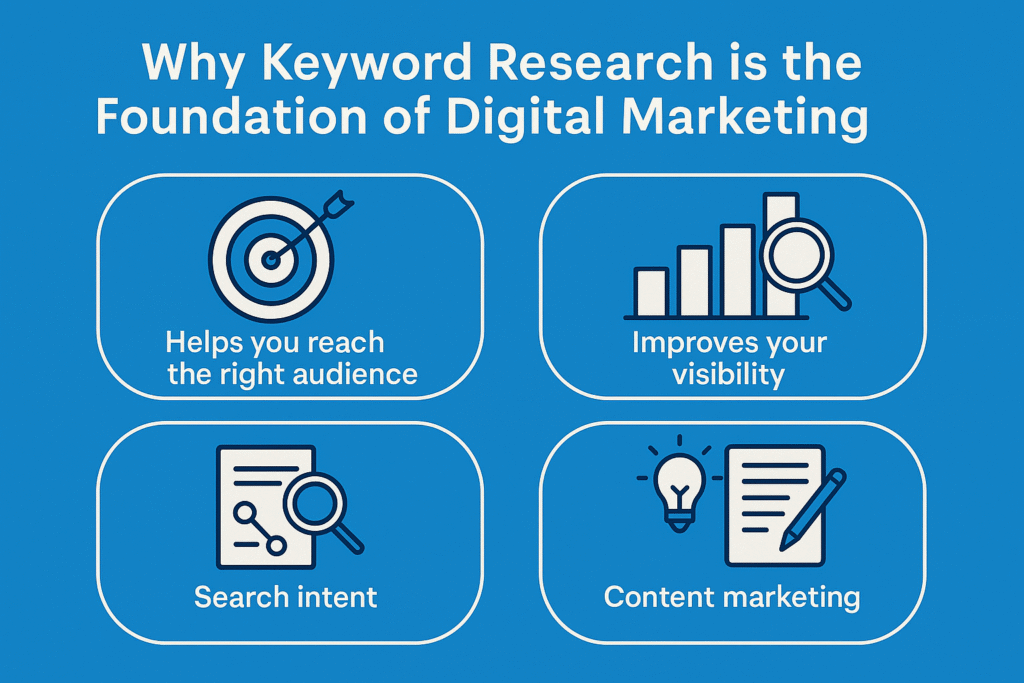
Why Keyword Research is the Foundation of Digital Marketing?
You wouldn’t build a house without a foundation — and you definitely shouldn’t build a marketing strategy without keyword research.
Because without it, you’re just guessing. You might be making great content… but for an audience that doesn’t even exist. Keyword research turns that guesswork into strategy.
Here’s why it’s the bedrock of everything digital:
🎯 Helps you reach the right audience
Not just more people — the right people. You’ll attract those already searching for what you offer, which means better traffic and higher conversions.
🚀 Improves your visibility
Google loves relevance. When your content matches what people search for, you climb up the search results naturally — no black magic, just logic.
💡 Reveals what your customers actually want
By analyzing keywords, you uncover what’s inside your audience’s head — their needs, pain points, and even the way they phrase their problems.
📈 Creates long-term growth
Instead of chasing viral spikes, you’ll build steady, compounding traffic. Keyword-optimized content keeps bringing visitors long after you’ve published it.
Types of Keywords You’ll Hear About
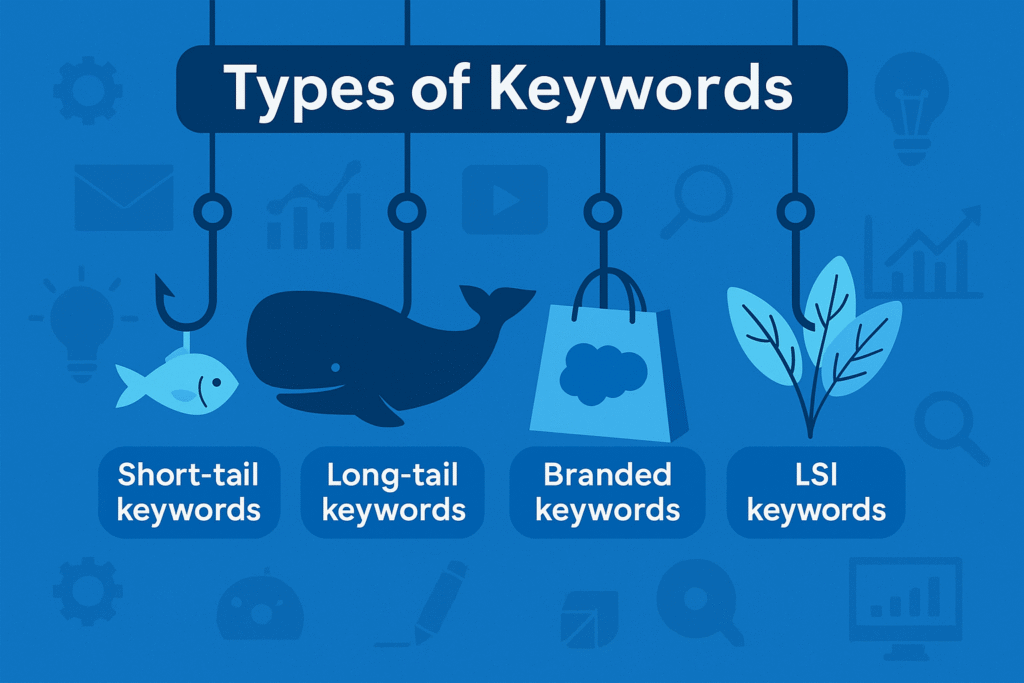
Not all keywords are created equal. Think of them as different tools in your marketing toolbox — each has its own purpose:
- Short-tail keywords: Short-tail keywords include 1–2 words, broad and competitive.
Example: “digital marketing”
(Good for brand awareness, but hard to rank.) - Long-tail keywords: Long-tail keywords include 3+ words, are more specific, and intent-driven.
Example: “digital marketing tips for beginners”
(These bring fewer visitors — but higher quality ones.) - Branded keywords: Branded keywords Include your brand name.
Example: “Nike running shoes”
(Used by loyal customers and brand-aware audiences.) - LSI (Latent Semantic Indexing) keywords: These are Related terms or phrases that help Google understand your topic’s context.
Example: If your main keyword is “coffee beans,” LSI words might be “roast types” or “brewing methods.”
👉 Together, these keyword types form your content’s DNA — short-tails for reach, long-tails for relevance, and LSI for depth.
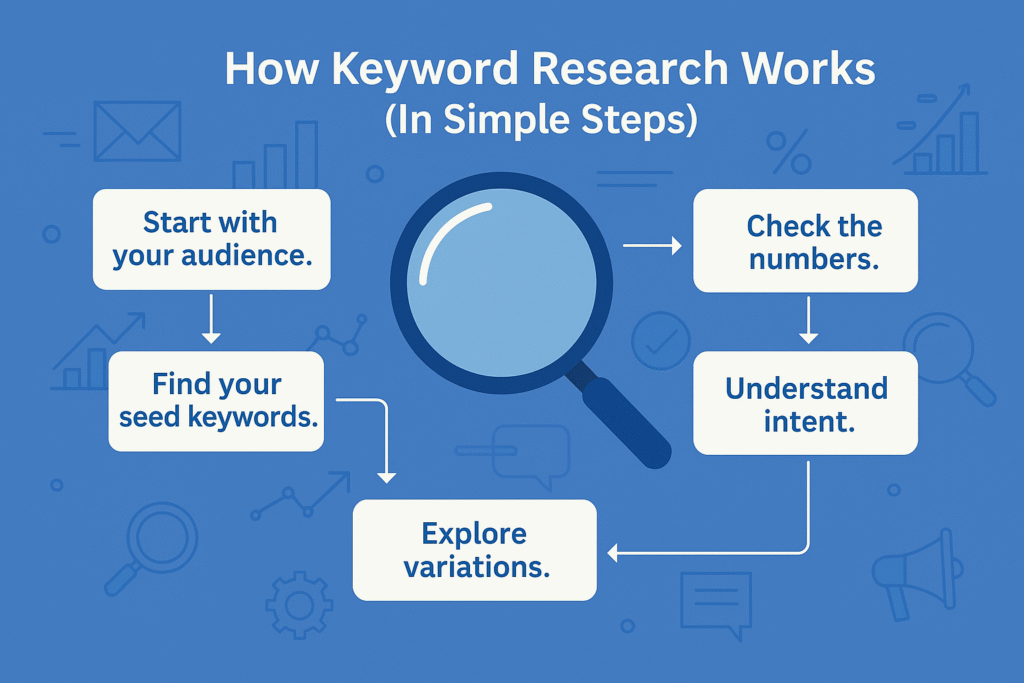
How Keyword Research Works (In Simple Steps)
Alright, let’s break it down — because keyword research sounds fancy, but it’s basically detective work with spreadsheets.
🧠 1. Start with your audience.
Who are you trying to reach? What problems do they face? What makes them stay up at 2 a.m. Googling answers?
For example, if you sell eco-friendly bottles, your people might search “best reusable bottles” or “eco water bottles for hiking.”
🪄 2. Find your seed keywords.
These are your starting points — the broad topics your business revolves around. Use tools like Google Keyword Planner, Ahrefs, or Ubersuggest to see what people are already searching for.
🌿 3. Explore variations.
Look for long-tail versions of your main keywords. They’re usually easier to rank for and tell you exactly what users want.
Think: “eco bottles” → “eco water bottles for kids” → “best stainless steel eco bottles.”
📊 4. Check the numbers.
Every keyword comes with data: search volume (how many people look for it) and competition (how many others are targeting it).
Aim for that sweet spot — keywords with decent volume and manageable competition.
🕵️ 5. Understand intent.
Every search has a goal:
- “What is…” → informational
- “Buy…” → transactional
- “Best tools for…” → commercial
If you know why someone is searching, you can deliver exactly what they need.
🧩 6. Plan your content.
Assign each keyword to a page or blog post. Keep one focus keyword per page — and naturally sprinkle in related terms.
🔁 7. Keep refining.
Trends shift, audiences evolve, and new keywords emerge. Keyword research isn’t a one-time task — it’s a cycle of learning and adapting.
Keyword Research Isn’t Just for SEO
Sure, keyword research helps your blog rank better — but it’s not just an “SEO thing.” It’s the secret sauce for almost every digital platform you use:
- Google Ads (PPC campaigns): Helps you bid on terms your customers actually click.
- YouTube SEO: Optimizes your titles and descriptions to boost video visibility.
- Social Media: Shapes posts around trending or interest-based topics.
- eCommerce: Optimizes product descriptions so shoppers find exactly what they want.
Once you understand how your audience searches, you can tailor everything — from ad copy to video titles — to fit their mindset.
Final Thoughts
Keyword research isn’t just about search engines — it’s about people. It’s not about stuffing words into your content, but finding meaning in what your audience is asking.
When done right, keyword research turns random clicks into loyal readers, curious visitors into customers, and digital noise into valuable conversations.
So next time you create content, ask yourself:
“What would someone type into Google to find this?”That one question separates the marketers who guess — from the marketers who win.

Muhilarasan is a Digital Marketing Freelancer specializing in SEO, content strategy, and online brand growth. He helps businesses improve visibility, attract the right audience, and build a strong presence across digital platforms.

Muhilarasan is a Digital Marketing Freelancer specializing in SEO, content strategy, and online brand growth. He helps businesses improve visibility, attract the right audience, and build a strong presence across digital platforms.
View All Articles